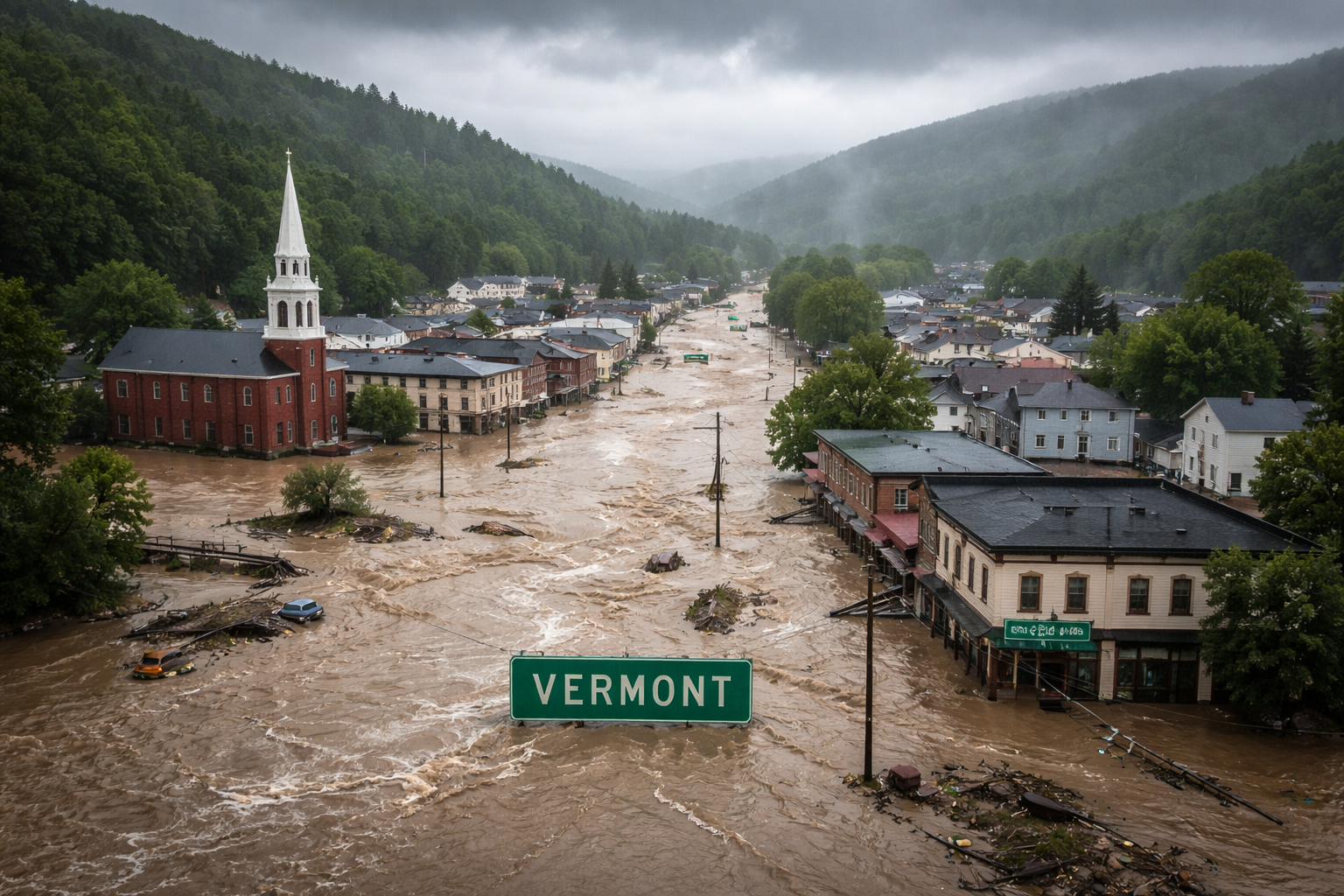
Vermont has faced repeated and severe flooding in recent years, with intense rainfall overwhelming rivers, streams, and drainage systems across the state. Mountainous terrain and narrow river valleys cause water to rise quickly, turning normally quiet waterways into destructive torrents. Communities along the Winooski, Lamoille, and Otter Creek rivers have been especially vulnerable, as floodwaters spread into downtown areas, homes, and farmland.
The impacts of flooding in Vermont extend beyond immediate property damage. Roads and bridges are frequently washed out, isolating rural towns and disrupting emergency response efforts. Farmers often lose crops and livestock, while residents face long recovery periods marked by cleanup, mold remediation, and financial strain. These floods have highlighted how climate change is increasing the frequency and intensity of extreme rainfall events in the region.
Despite these challenges, Vermont communities have shown resilience in the face of flooding. Neighbors help one another with evacuations and rebuilding, and local organizations coordinate relief and recovery efforts. State and local leaders are also investing in floodplain restoration, stronger infrastructure, and climate adaptation planning to reduce future risks and better protect people, ecosystems, and livelihoods.
Leave a Reply